


 BIMON document · November 2026
Case study · Hospitals
Prato Hospital Digital Twin
For Impresa Pizzarotti, BIMON created the digital model of Prato Hospital and all its MEP systems, analysed the available data and connected the model to the hospital's management systems. The result is a Digital Twin built to reduce energy consumption and optimize maintenance.
- Client
- Impresa Pizzarotti S.p.A.
- Location
- Prato, Italy
- Year
- 2022
- Floor area
- 60,000 m²
- 540Beds
- 15Operating rooms
- 40Dialysis stations
- 20Short intensive observation units
- 6 + 4Labour and delivery rooms
- 25Management period (years)
Context
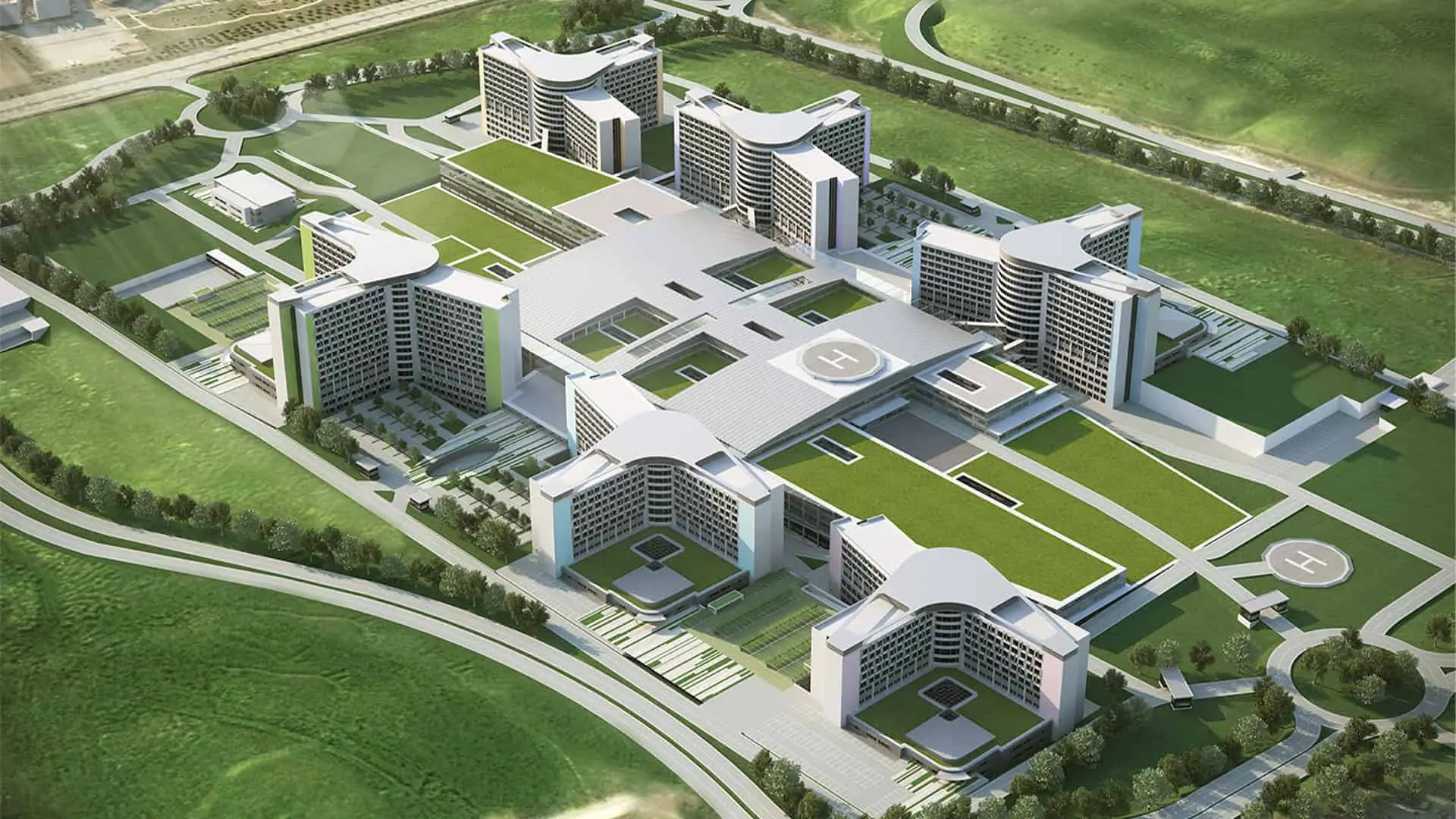
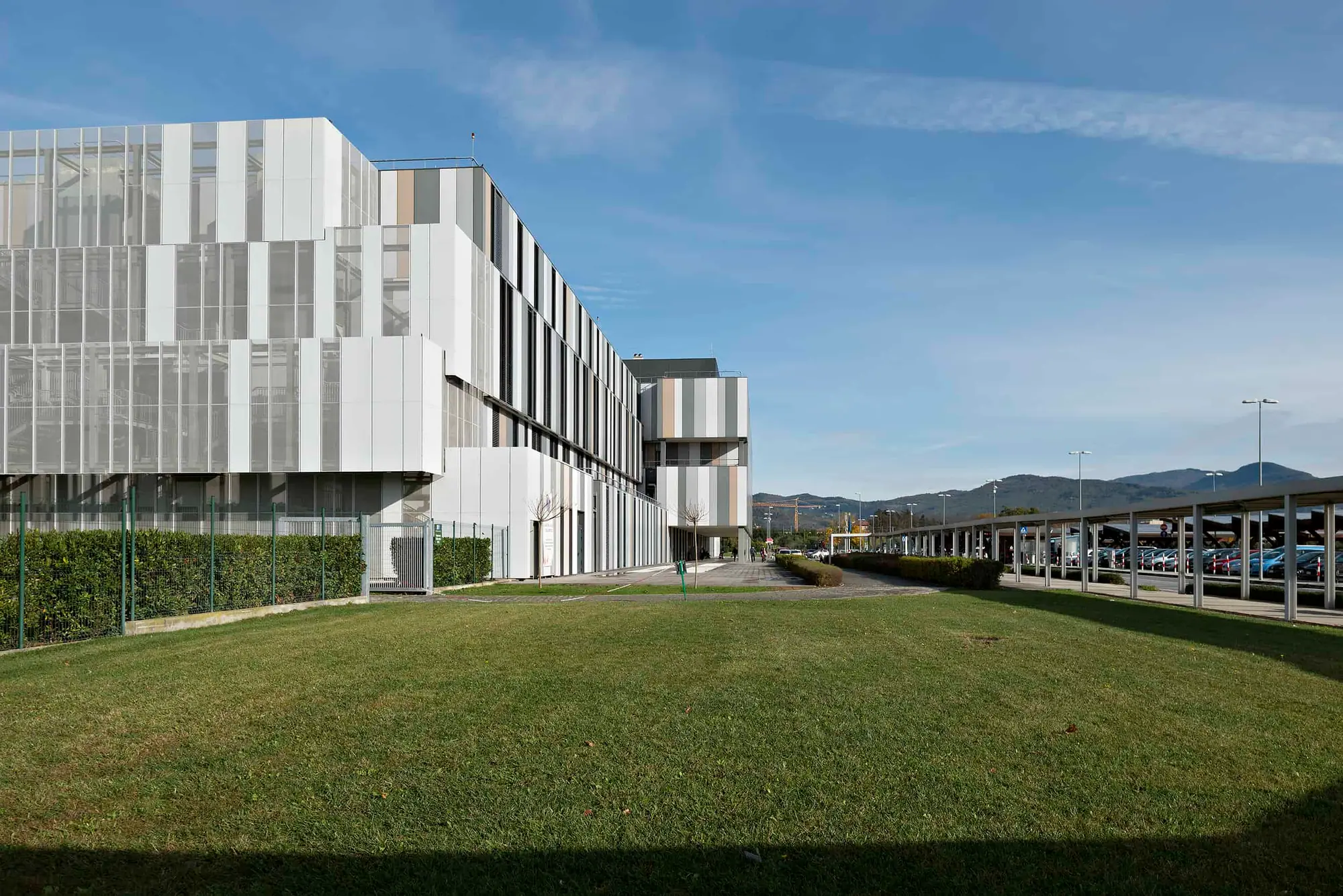
The new Prato hospital is one of four large new hospitals in Tuscany, built with a project financing formula around efficiency, functionality, comfort and safety. It is part of the "Tuscan Hospitals" system built by Pizzarotti, which will also manage it for the next 25 years.
The complex sits north-west of the city, closely integrated with the surrounding area, and consists of two buildings: the hospital and the service building. It has 540 beds, 20 short intensive observation units, 40 dialysis stations, 15 operating rooms, 6 labour rooms and 4 delivery rooms.
The PNH Digital Twin project brings together data, software and algorithms to improve how the hospital is run, applying the Digital Twin and Smart Building concepts to energy consumption and maintenance.
What we did
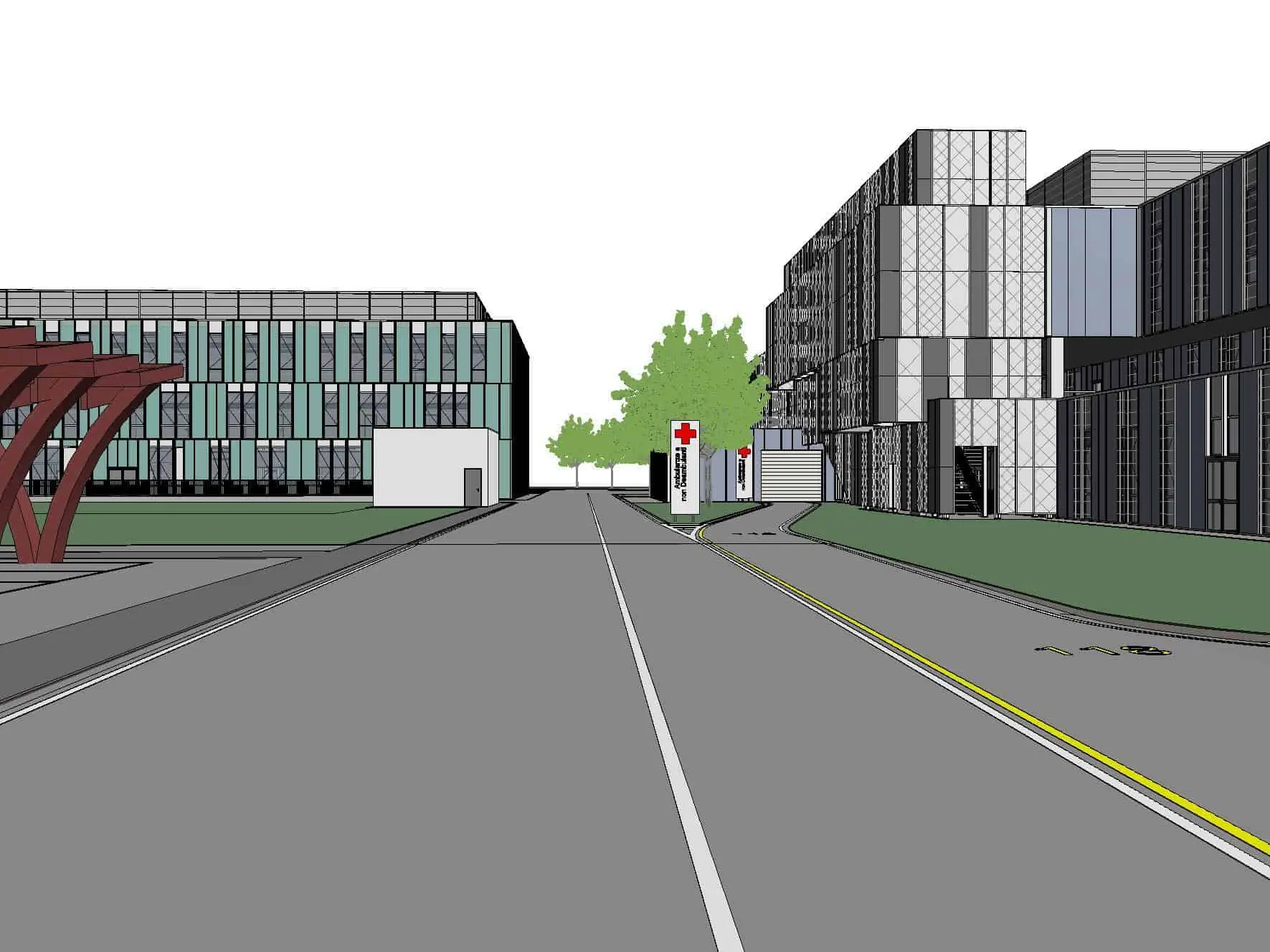
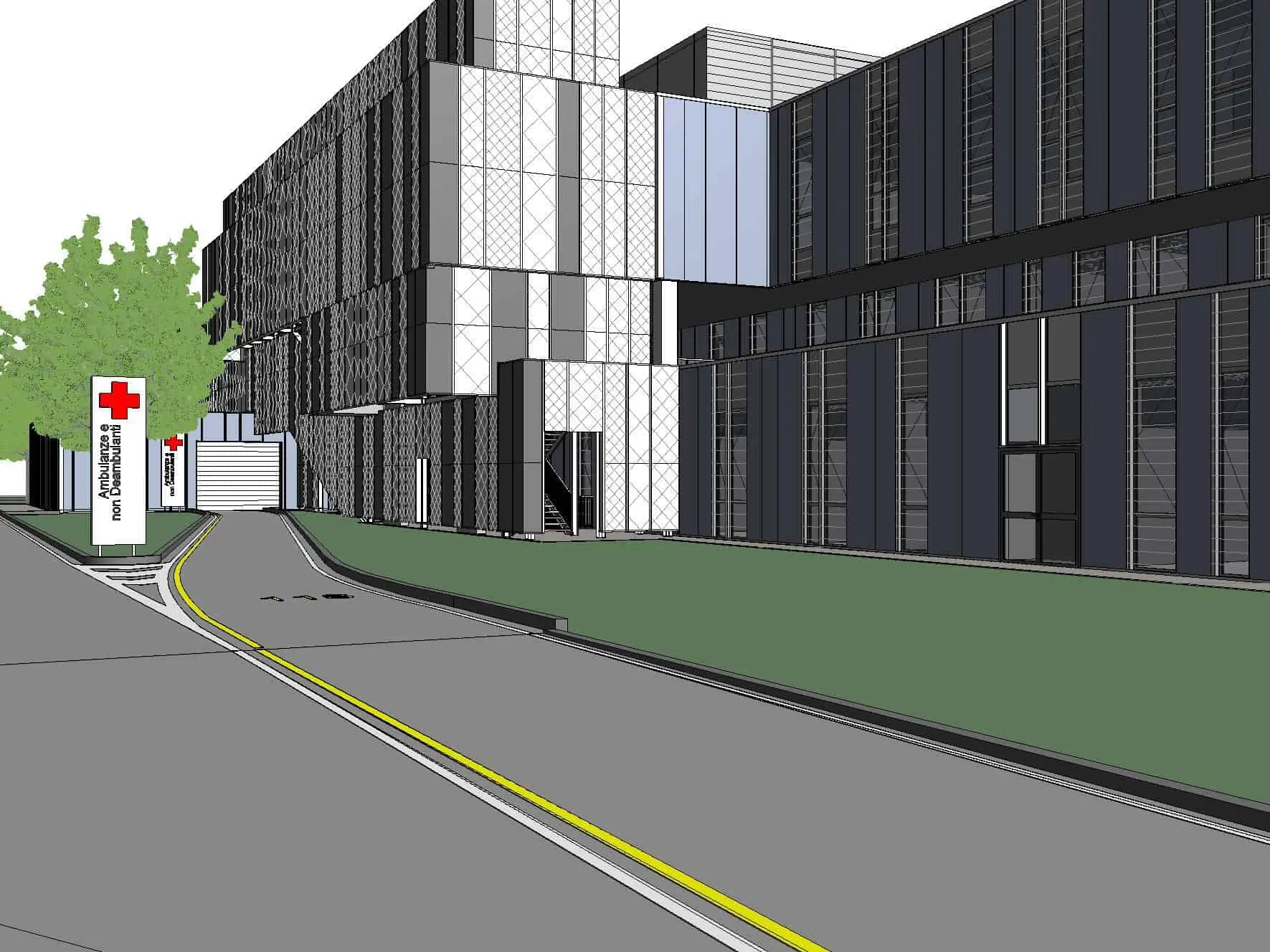
A working Digital Twin starts from a reliable digital representation of the building. BIMON built the BIM model of the hospital and of all its MEP systems, including every asset needed for operation, with accurate scanning and automated recognition and classification of components.
The model was then integrated with data from different sources, IoT sensors and the BMS, and piped into a digital data platform connected to the hospital's management system. BIMON analysed the available data and set up custom checks on information content, so that information and modelling nonconformities can be monitored over time.
With the data collected and analysed by Artificial Intelligence algorithms, the hospital can move to predictive maintenance and generate energy savings. Data is shown in simple, accessible dashboards for the people who run the building.
Results
- 01
Digital Twin
A BIM model with all assets, integrated with IoT and BMS data on a single data platform, gives a live digital replica of the hospital.
- 02
Energy savings
Data collected and analysed with Artificial Intelligence algorithms enables predictive maintenance of the building and the resulting energy savings.
- 03
Asset digitalization
The hospital becomes a digital asset that is easy to manage, with better coordination among professionals and better planning of activities.
At a glance
- Easy management of the hospital as a digital asset
- Better coordination and planning among the professionals involved
- Accurate scanning and detailed as-is models
- Lower risks and costs during implementation
- Automated recognition and classification of components
- Controlled data transmission process
- Custom checks on information content and monitoring of nonconformities
- Simple, accessible data visualization
Technologies
- BIM
- Digital Twin
- IoT
- BMS
- AI
- Scan to BIM
How to replicate it on your asset
- 1
We start from what you have: drawings, models, BMS and meter data. If something is missing, we laser-scan the building.
- 2
We build the as-is BIM model, MEP included, with the assets you actually need to run the building.
- 3
We connect the model to IoT sensor and BMS data on one platform and set up data quality checks.
- 4
We deliver simple dashboards for energy and maintenance, built for the people who run the building every day.
Want the same for your building?
Tell us about the asset and the data you already have. A BIMON engineer will reply within two working days.
info@bimon.it · +39 06 85383064 · bimon.it
Start a project →BIMON S.r.l. · Via Velletri 35, 00198 Roma · P.IVA 13444611001