








Since 1 January 2025, Italian contracting authorities and conceding entities must use BIM (the Code calls it "gestione informativa digitale delle costruzioni") to design and build new works and interventions on existing works with an estimated works cost above €2 million. The rule sits in article 43 of Legislative Decree 36/2023, as amended by Legislative Decree 209/2024, and Annex I.9 sets out how to apply it.
We have been working inside this framework since the first ministerial decree in 2017, on the client side and the contractor side. This article summarises what the norm says, where it is clear and where it still leaves room for interpretation. If you want a quick answer for a specific procedure, use our BIM Mandate Checker.
What article 43 says
Article 43, paragraph 1, in force since 31 December 2024, reads (our translation): from 1 January 2025, contracting authorities and conceding entities adopt digital information management methods and tools for the design and construction of new works and for interventions on existing works "with an estimated works cost above 2 million euros", or above the EU threshold of article 14 for buildings protected under article 10 of the Cultural Heritage Code.
The second sentence excludes ordinary and extraordinary maintenance, "unless it concerns works previously executed" with BIM methods.
Paragraph 2 allows voluntary use below the threshold, with optional premium points in the tender. Paragraph 3 requires interoperable platforms and open, non-proprietary formats. Paragraph 4 delegates the technical detail to Annex I.9.
What the 2024 "Correttivo" changed
The original 2023 text set the threshold at €1 million of "importo a base di gara". Legislative Decree 209/2024 (art. 15) raised it to €2 million and changed the reference to the "estimated works cost". It also introduced the higher threshold for listed heritage buildings, where digitising monumental fabric is costly for small authorities. The start date stayed at 1 January 2025.
Thresholds at a glance
| Case | Threshold (works cost, net of VAT) | From |
|---|---|---|
| New construction | above €2,000,000 | 1 Jan 2025 |
| Interventions on existing works | above €2,000,000 | 1 Jan 2025 |
| Listed heritage buildings (art. 10 c.1 D.Lgs. 42/2004) | above the EU works threshold: €5,538,000 in 2025, €5,404,000 from 1 Jan 2026 | 1 Jan 2025 |
| Ordinary and extraordinary maintenance | excluded, unless the asset was delivered with BIM | 1 Jan 2025 |
| Below threshold | optional, with Annex I.9 measures in place | since July 2023 |
The EU threshold changes every two years by Commission delegated regulation. The 2026-2027 value comes from Delegated Regulation (EU) 2025/2152.
How the amount is calculated
The ministry's guidelines of February 2026 clarify that the reference is the estimated cost of the works, made at the DOCFAP stage (the document comparing design alternatives) according to article 14 of the Code. In practice:
- it is the cost of the works, not the whole project budget with fees and contingencies;
- it is net of VAT (art. 14, paragraph 4);
- it includes options and all lots of the same work (art. 14, paragraphs 4 and 9);
- splitting a work to stay under the threshold is not allowed (art. 14, paragraph 6);
- the wording is "above": a works cost of exactly €2,000,000 is not covered.
For projects that mix physical works and immaterial components, such as software or technology upgrades, the guidelines apply article 43 only to the physical part.
What is covered and what is excluded
Covered: design and construction of new works, and interventions on existing buildings and infrastructure that are not maintenance. That includes renovation, extension, seismic upgrading and restoration above the threshold.
Excluded: ordinary and extraordinary maintenance. For buildings, the guidelines point to the definitions in article 3 of Presidential Decree 380/2001. For infrastructure they propose an analogy: ordinary maintenance contains normal degradation, extraordinary maintenance renews or replaces components or whole subsystems.
The exception matters for owners of recent assets. If a hospital or a station was delivered with BIM, its maintenance contracts above €2 million must keep using BIM. The reason given is continuity: the information model should not die after handover.
Who must comply, and what they must have
The obligation falls on "stazioni appaltanti" and "enti concedenti", so it covers concessions as well as contracts. Before running any BIM procedure, mandatory or voluntary, Annex I.9 (art. 1, paragraph 2) requires the authority to:
- adopt a training plan for staff, by role;
- adopt a plan for hardware and software acquisition and maintenance;
- adopt an organisational act ("atto di organizzazione") that defines roles, responsibilities, decision processes, information flows and standards.
Paragraph 3 then requires three roles:
- a CDE manager (gestore dell'ambiente di condivisione dei dati), for the whole organisation;
- at least one BIM manager (gestore dei processi digitali), for the whole organisation;
- a BIM coordinator (coordinatore dei flussi informativi) for each intervention, inside the team supporting the RUP.
These people should preferably be employees with documented skills. If the authority cannot find them internally, it can outsource the functions. The guidelines accept combined roles and external support, provided decisions stay inside the authority.
Paragraph 4 adds a common data environment owned by the authority. Every deliverable must reach the authority through it.
Design and execution: the documents that matter
Design services
When tendering design services, the authority attaches a capitolato informativo (the Italian equivalent of the Exchange Information Requirements in ISO 19650). Annex I.9, paragraph 8, sets its minimum content: information requirements and levels of information need, production and archiving rules, CDE specifications and ownership, interoperability over time.
Works contracts
For works tendered on an executive design or as design-and-build ("appalto integrato"), the authority prepares a capitolato informativo consistent with the design level in the tender (paragraph 9). The flow then follows ISO 19650:
- bidders submit an offerta di gestione informativa (pre-appointment BEP) when the award uses the most economically advantageous tender;
- the winner drafts the piano di gestione informativa (BEP) after signing and before works start;
- design verification uses BIM tools;
- at final acceptance the contractor delivers as-built models and a specialist report on modelling.
From the moment BIM is mandatory, the information models prevail contractually over drawings, "within the limits of what is technologically feasible". The guidelines ask teams to state in the BEP which drawings are generated by the model and which are not.
Standards
Annex I.9 points to UNI EN ISO 19650 as the reference series, with UNI 11337 as a useful national complement. We cover how this works in practice in our article on ISO 19650 and BIM management.
Transitional rules
Article 225-bis, added by the Correttivo, keeps out procedures already under way on 31 December 2024. The February 2026 guidelines read it this way:
- above the EU threshold: excluded if the programming procedure had started and the DOCFAP was drafted by that date;
- between €2 million and the EU threshold: excluded if, by that date, the design call was published, invitations were sent, or the design was awarded.
In both cases the exclusion covers the whole intervention, construction included. Cases such as completing an unfinished work after contract termination have received separate ministry opinions and need case-by-case review.
What this means for companies
For designers and contractors, the capitolato informativo is now a central tender document. The offerta di gestione informativa carries technical points, and the BEP becomes a contractual commitment. Bid teams need people who can read information requirements and price them.
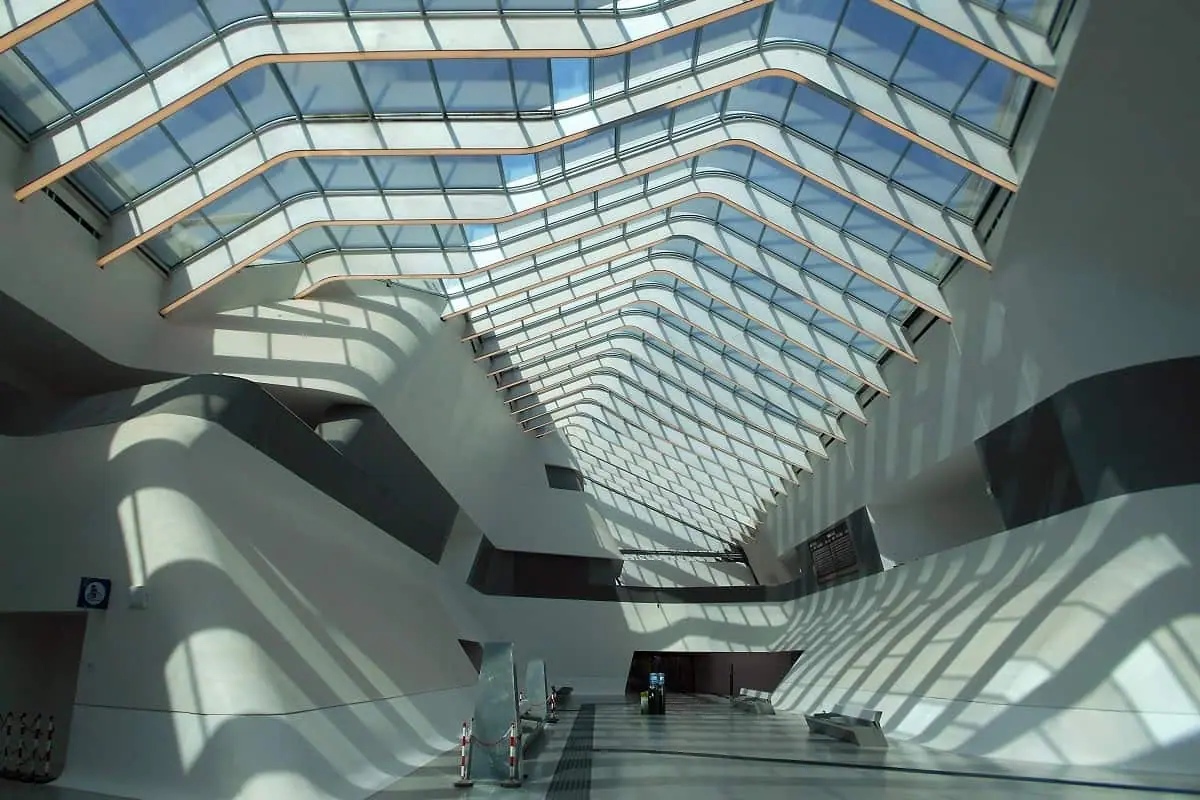
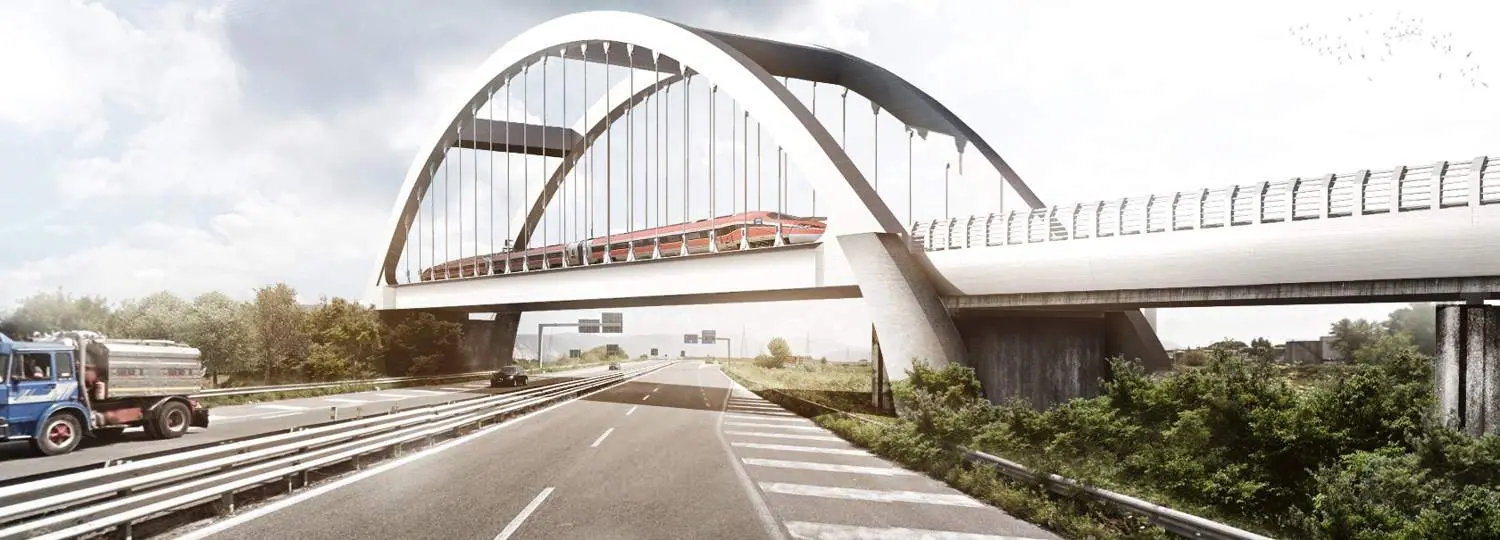
We saw this on the Naples-Bari railway, where BIMON supported Pizzarotti from the tender stage. Introducing BIM in the technical bid let the team test improvement proposals and verify savings in cost and time before submitting. On MIND Milano Innovation District we run masterplan data management and BIM management for Lendlease across a 1,000,000 m² site, the kind of structure the Code now asks public owners to build.
Where the norm is still open
Some points are not settled by the text and should be checked with a legal office:
- whether safety costs count in the €2 million estimate (usual practice includes them);
- how the heritage threshold applies when the EU value changes between estimate and tender;
- how the obligation works in project finance, when a private promoter drafts the feasibility design;
- the line between extraordinary maintenance and renovation on infrastructure.
Our research note lists these with sources. The checker flags them when your inputs fall in a grey area.
How BIMON supports authorities and bidders
We help contracting authorities set up the atto di organizzazione, the CDE and the first capitolato informativo, and we act as external BIM coordinator where the authority needs one. For bidders we prepare the offerta di gestione informativa and run BIM management, CDE management and model validation during the contract.
Start with the BIM Mandate Checker to see where your procedure stands. This article is for information only and is not legal advice. Sources: art. 43, art. 14, art. 225-bis and Annex I.9 of Legislative Decree 36/2023 (Normattiva, text in force on 6 November 2026), MIT guidelines of 20 February 2026.