
Digital twin · BIM · IoT · BMS · AI
Digital twins for buildings and infrastructure
The model that keeps working after handover.
A digital twin is a digital replica of a building or infrastructure asset, connected to real data from systems, sensors and maintenance, that updates while the asset is in use. We build it from a survey or a BIM model, connect it to BMS, IoT and management systems, and use it to make decisions on energy, maintenance and space.
BIM and digital twin: the difference
| BIM | Digital Twin | |
|---|---|---|
| Describes | The asset as designed and built | The asset as it works today |
| Data | Static, updated at each delivery | Dynamic, from BMS, sensors and maintenance |
| Who uses it | Designers, contractors, client | Facility managers, maintenance teams, energy managers |
| Typical question | Does this duct fit in the ceiling void? | Why does this zone use more energy than the others? |
How it is built
From survey to digital twin, in four steps
AHU-01 · Level 2
LIVESupply air temperature, last 24 hours
Filter: differential pressure above threshold
01 · Survey
Start from what exists
Laser scanning and photogrammetry produce a point cloud of the asset as it is. If a reliable BIM model already exists, we start from it and check it on site.
- Laser scanner
- Point cloud
- Scan to BIM
02 · BIM model
A model made for operations
Geometry, but above all assets: every system and component has a code, a class and the attributes maintenance teams need. This is where you decide whether the twin will be useful.
- IFC
- Asset coding
- COBie
03 · Connection
Data finds its object
BMS points, IoT sensors, maintenance work orders and meters are mapped to model objects. From then on an alarm has a precise place in the building.
- BMS
- IoT
- CMMS
- API
04 · Live twin
Decisions on data that updates
Dashboards, alerts and AI analytics on consumption and failures: maintenance is planned before the fault happens, and you can see where energy is wasted.
- Dashboard
- AI
- Predictive maintenance
Two moments, two twins
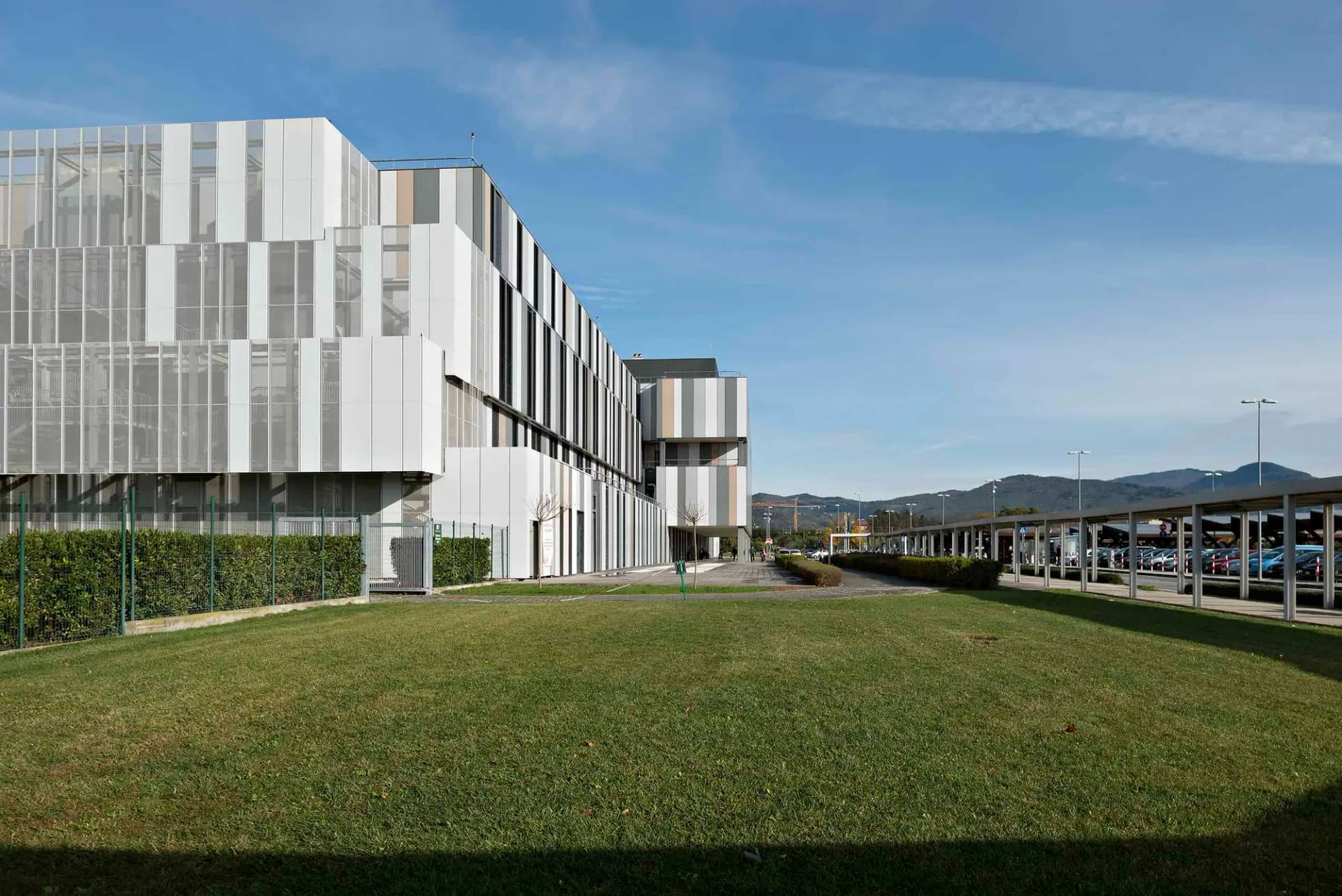
Case · Impresa Pizzarotti S.p.A. · 2022
Prato Hospital Digital Twin
For Impresa Pizzarotti we built the digital model of the Santo Stefano Hospital in Prato, 60,000 m², and all its MEP systems, and connected it to IoT and BMS data in a single platform. The data, analysed with AI algorithms, is used to plan predictive maintenance and cut energy consumption.
Prato Hospital Digital Twin →What you need to start
- 1A measurable goal: consumption, failures, use of space
- 2The documents and models you have, even if incomplete
- 3The list of systems producing data: BMS, meters, maintenance
- 4Who will use the twin every day, and for what
Frequently asked questions
What is the difference between BIM and a digital twin?+
BIM describes the asset as designed and built, with data updated at each delivery. A digital twin starts from an information model and connects it to data that changes over time, from BMS, sensors and maintenance, to describe how the asset works today.
Do you need a BIM model to build a digital twin?+
You need an information model of the asset with coded assets. If a reliable BIM model exists, we start from it; if it is missing or does not match reality, we survey and build the model with Scan to BIM, limited to what operations need.
Which systems does it connect to?+
Usually with the BMS, IoT sensors, energy and water meters and the maintenance system (CMMS or CAFM). The link uses APIs or open protocols; first we check which data is really available and at what quality.
Can we start with part of the building?+
Yes, and it is often the best way: one system, one floor or one building of a complex. You measure the result against the chosen goal, then extend it.
BIM consulting for the Italian market
- BIM consultingDigital, at the service of those who build.→
- Outsourced BIM managerRoles covered. Decisions that stay yours.→
- BIM support for contracting authoritiesEvery duty, at the right moment.→
- Information requirements (EIR)Requirements written first. Useful models later.→
- BIM trainingSkills by role, on your own projects.→
- CDE managerEvery file in its state. Every step with a name.→
Which asset do you want to run better?
Tell us about the building or infrastructure, the systems you have and what you want to improve. We will reply within one working day.