

On industrial plants BIM and Digital Twin save time and money mainly in two moments: when new equipment has to fit into an existing plant, and when the plant is running and every hour of stop costs production. In both cases the value comes from having one coordinated model of structures, systems and equipment that matches what is on site.
Industrial assets differ from buildings in one practical way: most of their cost and risk sits in systems. Pipes, ducts, cable trays and process equipment fill the space, and they change during the life of the plant. This article looks at where digital methods pay off and at three BIMON projects in the sector.
Three moments where the model matters
Design of new plants
In a new plant the BIM model coordinates architecture, structures and MEP around process equipment. Clashes found in the model cost hours. The same clash found on site, between a pipe rack and a beam, costs days and a change order. The model also produces the quantities needed for procurement, which on industrial jobs is often on the critical path.
Revamping and expansion
This is where we see the largest benefit. When a plant is expanded, new lines and machines must fit among existing structures and systems, often with tight shutdown windows. A model of the existing plant, usually from a laser scan survey, plus the model of the new parts, lets the team test sequences and spaces before the crane arrives.
Operation
In operation, the twin links the model to the data of the plant: BMS or SCADA points, meters, maintenance records. The questions are practical. Which equipment causes most stops? Where is energy lost? What happens if we add a line here? Answers depend on data quality more than on software.
The common thread is a single source of truth for geometry and data. On many plants the same pump exists in four places: a P&ID, a CAD layout, the maintenance software and a supplier datasheet, each with a different code. Bringing them together in one model, with one code, is unglamorous work and the condition for everything else.
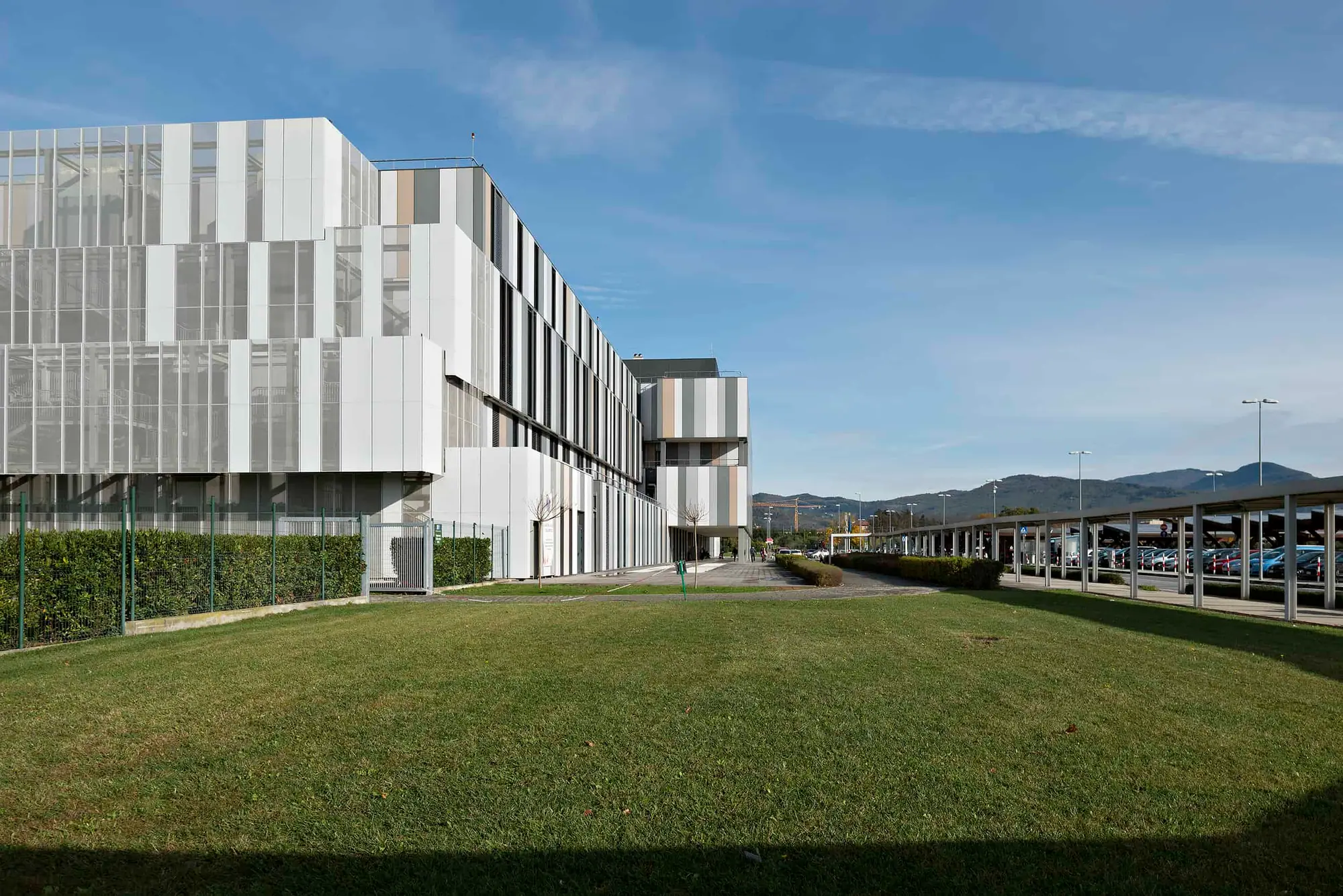
Inalca, Sochocin: design of a 46,000 m² meat processing plant
Inalca, part of the Cremonini Group, built a slaughtering and meat processing plant in Sochocin, Poland. The complex covers about 46,000 m² in five factory buildings, some existing and upgraded, some new.
For STI Engineering, BIMON was in charge of the multidisciplinary detailed and construction design in 2018. We produced the designs and BIM models for architecture and MEP up to issued-for-construction drawings, including the executive design of electrical, special and mechanical systems. Working with the client on multidisciplinary coordination, we produced construction drawings and extracted all quantities needed for purchasing control for Building B and the rack.
In a food plant, MEP design carries hygiene constraints on top of the usual ones: washable surfaces, separation of clean and dirty flows, controlled environments. Coordinating these in a single model kept constraints visible to every discipline.
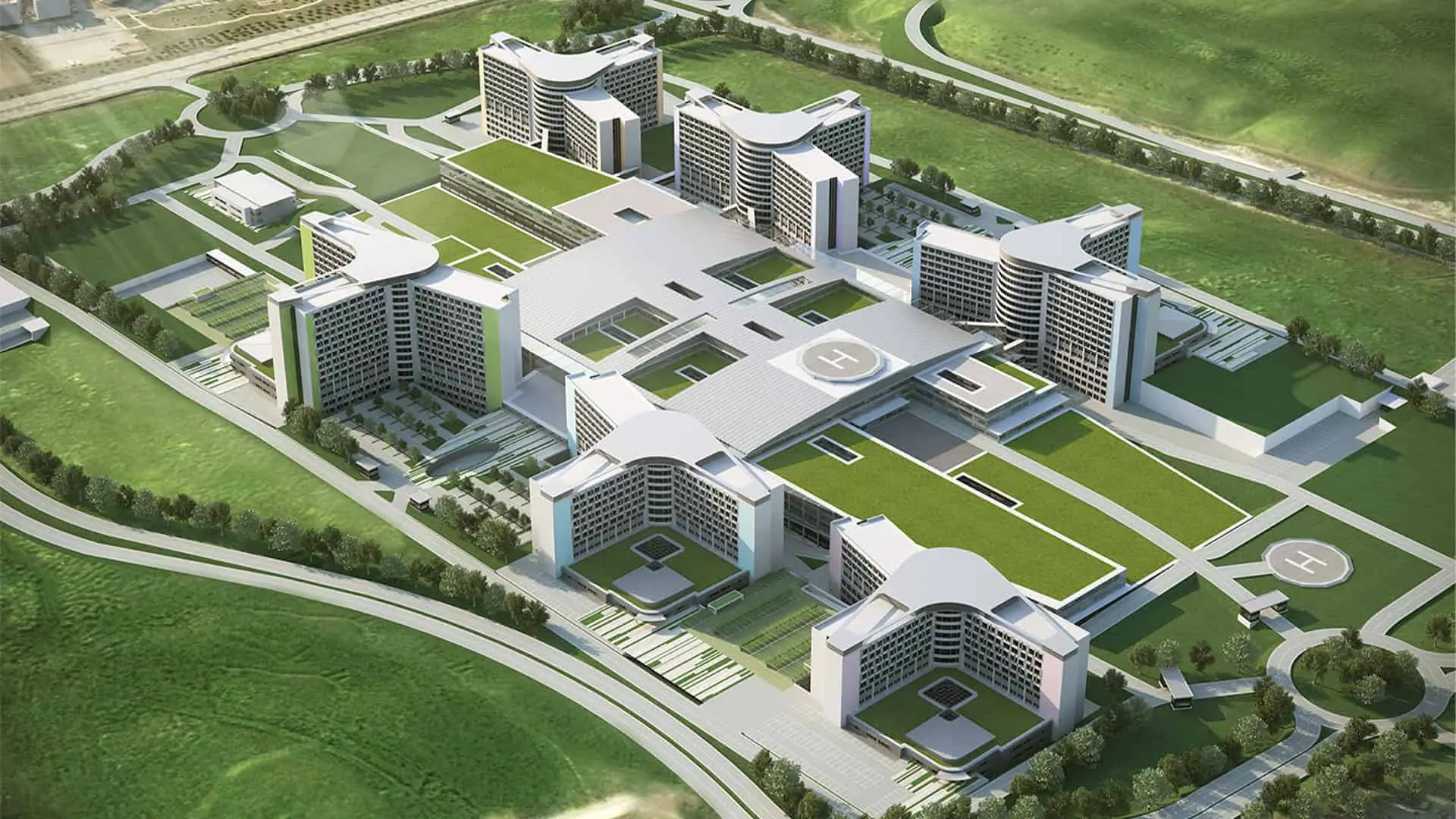
WTE Trieste: expanding a waste-to-energy plant
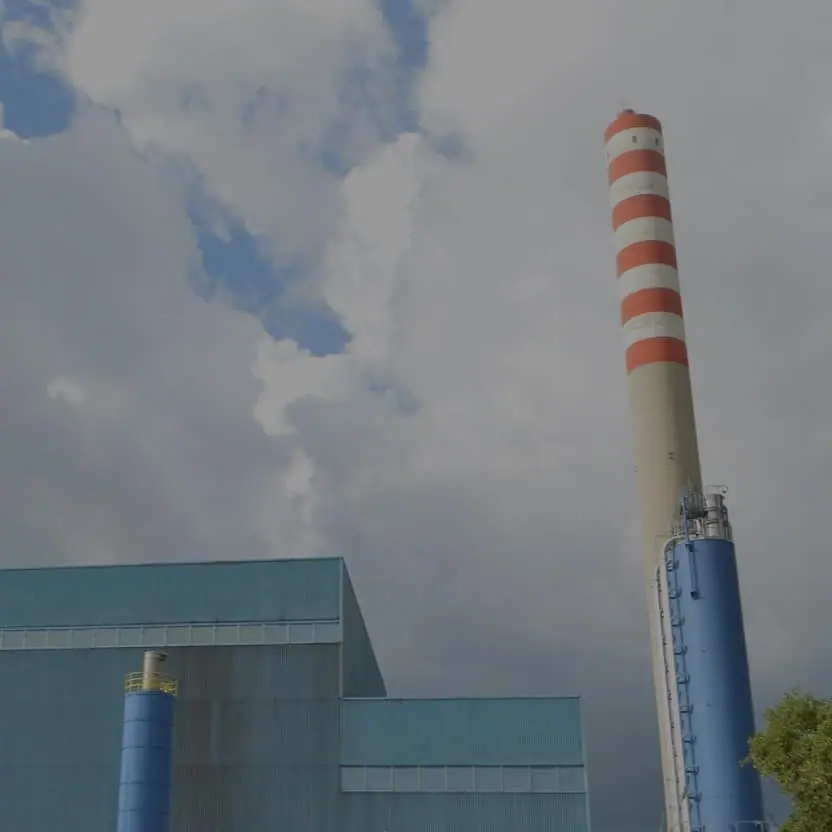
The Hera waste-to-energy plant in Trieste, called Errera 3, is the evolution of the previous Errera 2, which had two incineration lines of 204 tonnes a day each and a 4.85 MW steam turbine producing 32 GWh a year. The renovation added a third treatment line and an entirely new thermal cycle serving all three lines, with a 14.9 MW turbine capable of 100 GWh a year.
On WTE Trieste, from 2021, BIMON created and coordinated all digital models and the simulations of the construction phases and methods of the new components, on a plant of about 12,000 m². Combining BIM with time simulations, the team resolved clashes before they appeared on site and kept construction activities on schedule. We also provided project BIM management consulting and monitoring based on site needs, with scanning to keep the models aligned with what had been built.
This is what we call a construction digital twin: the model follows the works and supports decisions on space and sequence. Its as-built output becomes the base for managing the plant afterwards. We explain the distinction in what a digital twin really is.
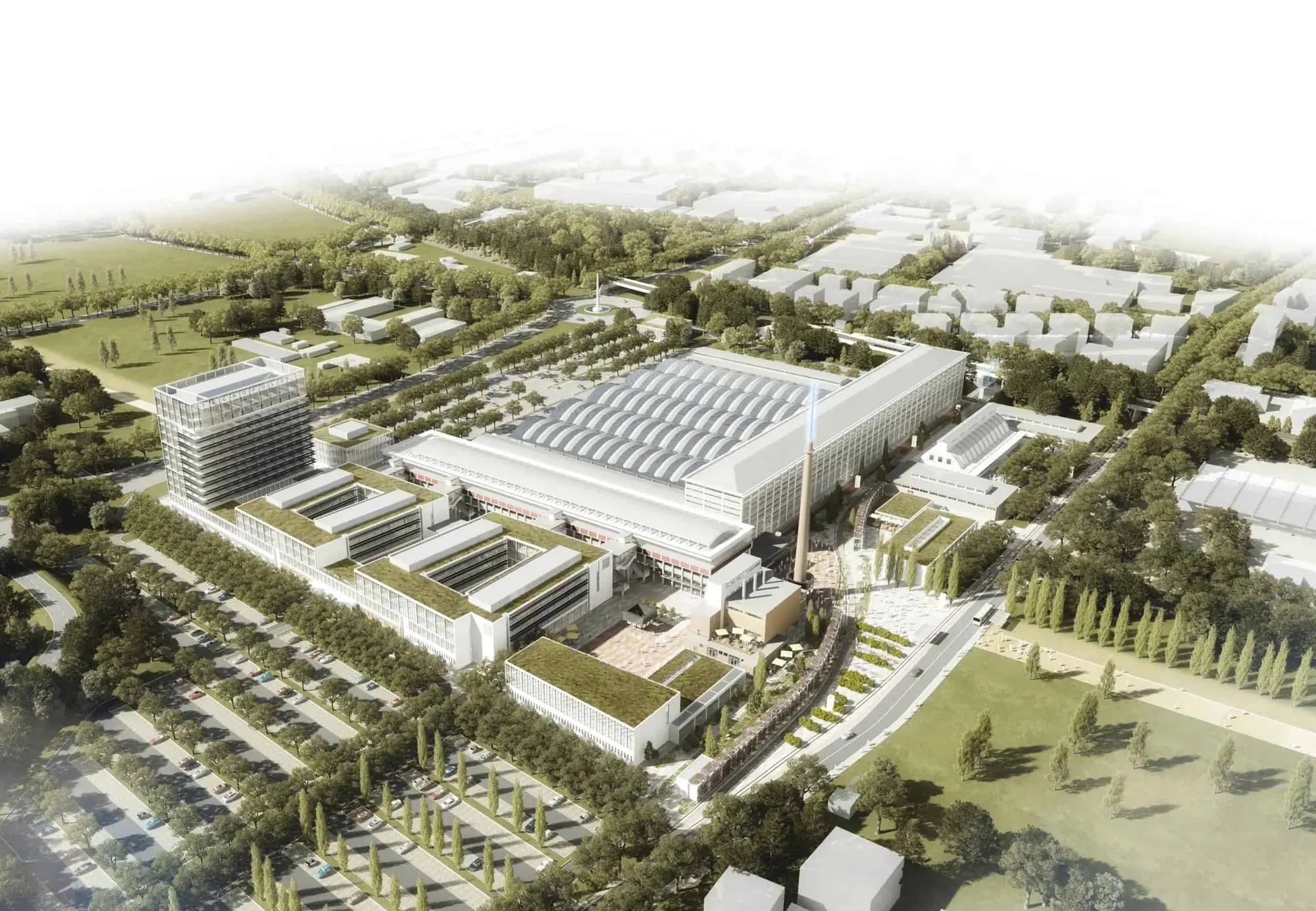
ECMWF data centre, Bologna: models from laser scan in a historic complex
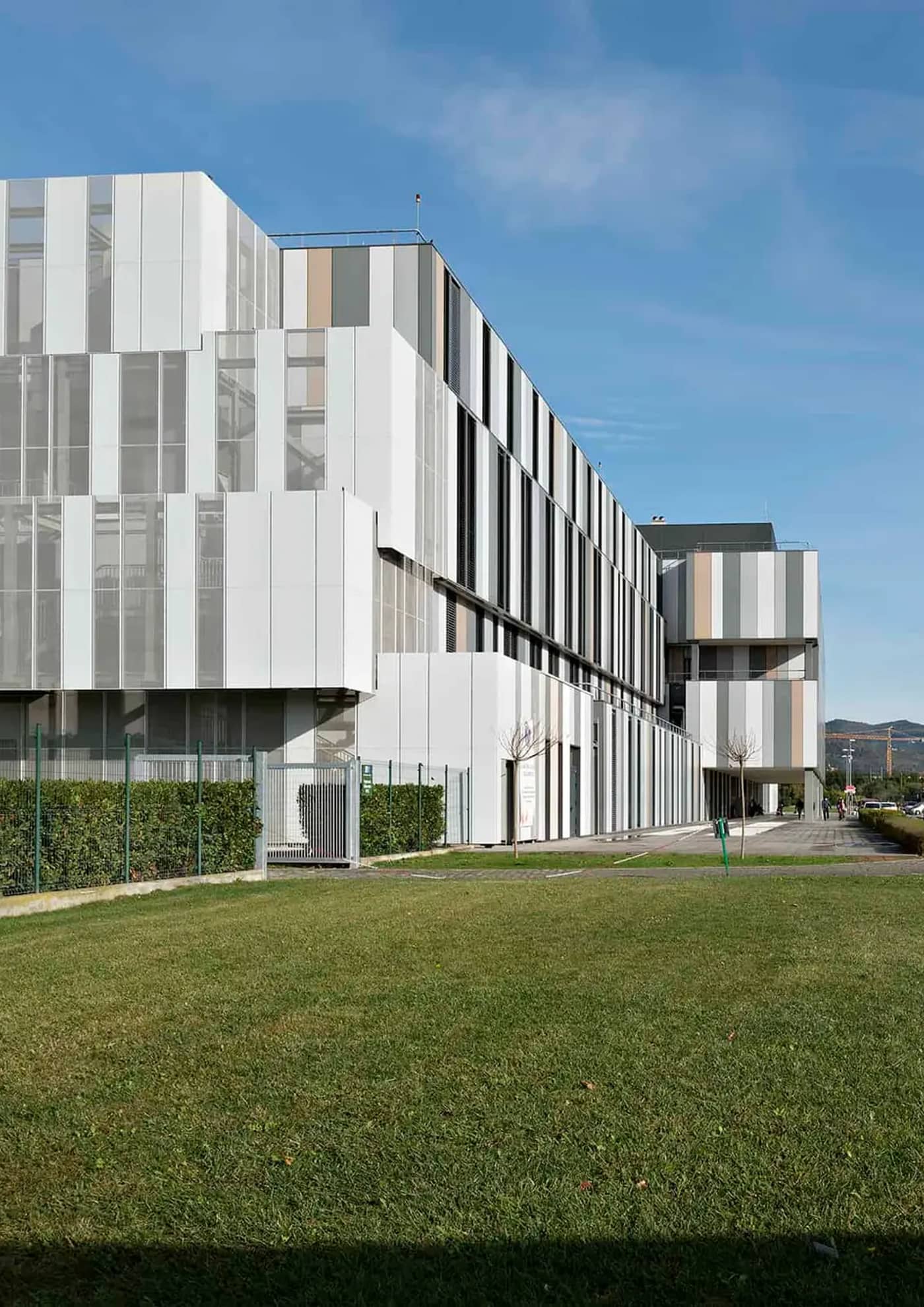
The data centre of the European Centre for Medium-Range Weather Forecasts sits in the Bologna Tecnopolo, in the former Manifattura Tabacchi designed by Pier Luigi Nervi in the 1950s. The project, funded with 40 million euros, occupies about 9,000 m², expandable by another 6,000 m², inside the existing "Botti" buildings, building L1 for transformers and UPS, and a new building L2 for technical plants.
For Aster, BIMON created the structural and MEP BIM model starting from a laser scan survey and the executive design. We then ran clash detection and code checking to verify the design before construction, aimed at correct execution and future maintenance of the building.
Data centres are dense in systems and intolerant of errors: power, cooling and redundancy paths must be exactly where the design says. Starting the model from a survey of the existing structures, rather than from old drawings, removed a whole class of site surprises.
Examples from around the world
Some of the world's most advanced industrial projects, delivered by other companies, show where this approach leads. Manufacturers such as Siemens and Tesla were quick to adopt it in their plants.
Siemens Digital Industries Factory, Amberg
The Siemens factory in Amberg, Germany, is one of the most advanced examples of Digital Twin in an industrial setting. The plant's digital twin brings product, process and performance information into a single model, so production can be optimised continuously.
This has allowed Siemens to reach unprecedented quality levels, with 99.9988% defect-free products, and to increase productivity eightfold without expanding the factory's physical space. The predictive system has reduced downtime by 30% and maintenance costs by 20%.
Tesla Gigafactory, Nevada
The Tesla Gigafactory near Reno, Nevada, runs an end-to-end Digital Twin covering the entire product lifecycle, from design to production. Every aspect of the production process is simulated virtually before it is built.
The system has cut production start-up times by 40%, optimised the plant's energy efficiency and supports continuous improvement based on operational data analysis. Being able to simulate the whole process virtually has allowed Tesla to scale production rapidly while keeping quality standards high.
Standards worth knowing
- ISO 23247 defines a framework for digital twins in manufacturing, focused on the production process.
- ISO 55000 series covers asset management systems, the organisational side that decides how twin data is used.
- EN ISO 19650 covers information management for the buildings and infrastructure that host the process. It is the reference for contracts and handover.
For publicly owned plants in Italy, such as utilities or waste facilities, works above €2 million fall under the BIM obligation of the Public Contracts Code. See our guide to the BIM mandate.
How to approach an industrial twin
- Start from the next intervention. A revamping or an expansion is the natural moment to build the model of the existing plant.
- Survey before designing. On existing plants, Scan to BIM is cheaper than discovering clashes during shutdown.
- Federate supplier models. Process equipment comes with its own 3D models. Agree formats and coordinates early.
- Keep the model alive after handover. Changes made by maintenance must flow back into the model, or it ages in a year.
- Connect operational data step by step. Start with maintenance records and main meters, then add process data where a decision needs it.
What BIMON does for industrial clients
We design MEP systems in BIM, coordinate multidisciplinary models on new and existing plants and build construction and O&M digital twins. Our MEP design, site monitoring and O&M Digital Twin services cover the life of the plant from design to operation. If you are planning a revamping, the model of what you have today is the first thing we would look at.